7 Strategies to Find the Right CPR Classes in Columbus, Ohio
November 10, 2026 · Written by CPR Class Listing
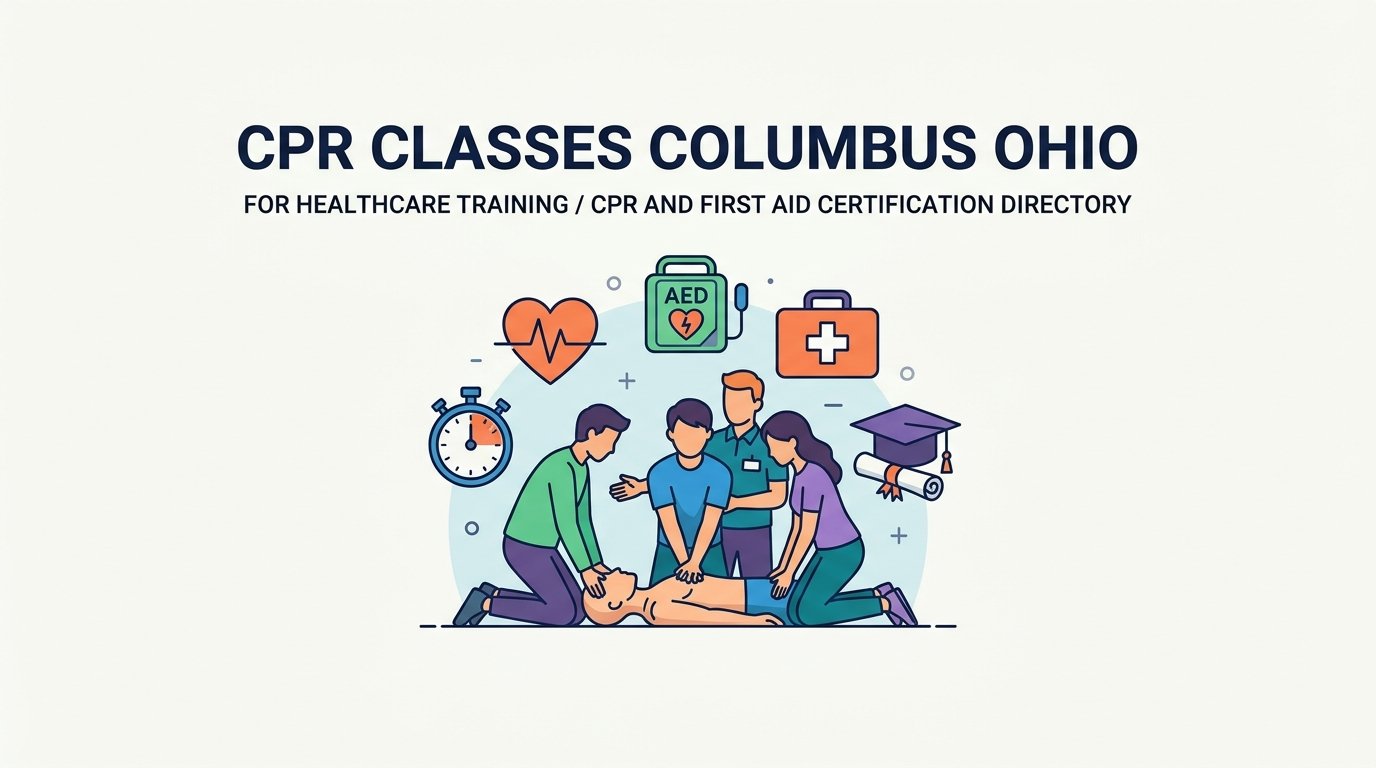
A practical guide to cpr classes columbus ohio.
If you need CPR classes in Columbus, Ohio, confirm which course and agency you need first, then compare local sessions by date, price, format, and location. Most people who end up paying twice skipped that first step. They booked a class that was close or cheap, then learned their employer or program wanted something else.
CPR stands for cardiopulmonary resuscitation. An AED is an automated external defibrillator, the device that can shock the heart back into a normal rhythm. The seven strategies below follow the order you'd actually make decisions, so you book the right class once. In an emergency, call 911. Don't wait for a class.
1. Confirm which course you actually need
Course names aren't interchangeable. Imagine a nursing student in Columbus who books a general CPR AED class because it's cheap and nearby. At clinical orientation she learns her program requires Basic Life Support (BLS), the healthcare provider level, and she has to pay for a second class. This is an illustration, but it happens often.
The reason it matters is that each course covers different skills. A CPR AED class is built for the general public and workplace responders. BLS adds team-based resuscitation and skills used in clinical settings, and you can see how the two differ in this CPR vs BLS certification comparison. Advanced Cardiovascular Life Support (ACLS) and Pediatric Advanced Life Support (PALS) are for clinicians who manage emergencies at a higher level. Pediatric First Aid | CPR AED focuses on infants and children and is common for childcare roles.
- Email HR, your program coordinator, or your licensing board contact.
- Ask for the exact course name, plus any agency or format rules.
- Ask them to reply in writing, and save that message.
The common mistake is assuming any CPR class counts, or choosing by price alone. Requirements vary by employer and by state licensing board, so don't guess. Ohio-specific rules for childcare or school staff should come from the Ohio Department of Children and Youth or the relevant board, not from a class listing.
What to measure: your card is accepted on first submission, with no retake.
2. Verify the required agency
Three agencies issue most cards you'll see in Columbus listings: the American Heart Association (AHA), the American Red Cross, and the Health & Safety Institute (HSI). Some requirers name one. Others accept any nationally recognized provider. The only way to know is to ask the people who will review your card.
Suppose an employer's handbook lists the accepted agencies. The learner reads it, then filters Columbus listings by exactly that agency. No guessing, no backtracking.
Here's how to do it:
- Check your employee handbook, program guide, or licensing board website.
- If the answer isn't there, ask HR or your coordinator directly.
- Use the agency filter on CPR Class Listing to narrow local sessions.
The common mistake is favoring an agency by reputation. All three are well known, and none is automatically the right pick. If you're wondering how an employer or board views a particular provider, this guide on whether HSI CPR certification is accepted shows what reviewers tend to look for. If the requirement says "AHA BLS," a different agency's BLS card may be rejected, even though the skills overlap.
What to measure: written confirmation, even a one-line email, that your chosen agency is accepted.
3. Choose the right format
Classes come in three formats. In-person classes teach everything in one room. Blended classes put the lesson online and finish with a short hands-on skills session with an instructor. Online-only classes have no hands-on component. Many employers and licensing boards require a hands-on skills check, so online-only cards are often not accepted. Confirm before you buy.
Consider a shift worker who picks blended. She finishes the online lesson at home after her kids are in bed, then books a short Saturday skills check. The flexibility is real, but only because she confirmed blended was allowed. If you want the full walkthrough, see how a blended CPR course works.
- Ask your requirer whether a hands-on skills check is required.
- Filter listings by format.
- For blended classes, check skills-session dates before starting the online portion. Some fill up weeks out.
The common mistake is buying an online-only course the employer won't accept. It's the most expensive error on this list because the fee is usually gone and you still need a second class. This explainer on whether employers accept online CPR certification covers what workplaces actually require.
Blended isn't always faster overall. Add the online time, the drive, and the skills session, and compare that with one longer in-person block.
What to measure: your card is accepted, and your total time spent matched your plan.
4. Compare Columbus classes by date, price, and location
Once you know the course, agency, and format, the field narrows quickly. Now a directory does its best work. CPR Class Listing lets you compare sessions side by side. You then register directly with the provider. The directory doesn't take bookings or payments.
Imagine a learner who compares three sessions within a 30-minute drive. One is cheapest but starts at 9 a.m. on a workday. Another is close but sells out in a week. The third has an evening time that fits. She picks the third.
- Filter by course, agency, format, and date.
- Shortlist three sessions.
- Open each provider's page for details.
- Register with the provider you choose.
The common mistake is comparing only sticker price. As of 2026, many CPR and first aid classes run roughly $45 to $110, while BLS, ACLS, and PALS cost more. Within that range, parking, fuel, time off work, and what the fee includes can change the real cost more than the listed price does. If you're also weighing nearby Midwest cities, our guide to CPR classes in Kansas City shows a similar comparison process.
What to measure: total cost and total time per option, and how many days remain before your deadline.
5. Check what's included before you pay
Two classes can list nearly the same price and still cost different amounts. Suppose one includes the electronic card (eCard) and the student manual, and the other charges separately for both. The cheaper-looking class ends up costing more.
Providers set their own policies, so a short message before you register saves surprises. Ask these five questions:
- Is the certification card included in the fee?
- Is the manual or digital study material included?
- How many students are in a typical class?
- What is the retake policy if I don't pass the skills check?
- How soon after class will I receive my card?
Class size matters more than people expect. Skills practice depends on time with manikins and the instructor, so a smaller group usually means more hands-on practice. Card timing matters if you have a start date coming up.
The common mistake is discovering add-on fees at check-in, when you've already committed your evening and your registration. Get the answers in writing if you can.
What to measure: your final out-of-pocket cost compared with the quoted price.
6. Plan around the two-year expiration
CPR cards are not for life. Certifications are typically valid for two years, and the date is printed on your card. Some people assume a card never expires, then find out at a job audit or a new hire packet that theirs lapsed months ago.
Imagine a childcare worker who sets a calendar reminder the day her card is issued. She sets another one for three months before it expires. Two months out, she books renewal and has plenty of dates to choose from.
- Record the issue and expiration dates somewhere you'll see them.
- Set two reminders: one around three months out, one at two months.
- Ask the provider about renewal eligibility. Some offer shorter renewal classes, and some require your current card to be unexpired.
That last point is where people get caught. If your card lapses, a provider may require you to take the full first-time course instead of a shorter renewal. That means more time and often more money.
Your employer may also set its own renewal timing, which can be stricter than two years. Check, don't assume.
What to measure: your renewal is booked at least a month before expiration.
7. Book a group or private class for your team
If several people at your workplace need certification, one group session beats separate trips. Everyone gets the same course, agency, and card timing, and scheduling happens once. Imagine an office manager who certifies a team of ten in a single session instead of coordinating ten calendars. For a broader view of what employers should plan for, read about first aid, CPR, and AED certification for the workplace.
- Count how many people need certification.
- Confirm the course, agency, and format every role requires.
- Request quotes and available dates from providers.
- Confirm how and when cards will be issued.
The common mistake is booking before confirming what all staff need. A front desk team might need CPR AED while a clinical group needs BLS. Mixing them up means some people get re-trained. Group needs often differ by role, so sort that out first. It also helps to understand OSHA first aid and CPR requirements for employers before you set your plan.
If you're a training center, you can list your sessions on CPR Class Listing so students searching in Columbus can find them and register directly with you.
What to measure: the percent of required staff certified by the deadline, and the cost per person.
Where to start, and what to do next
Start with strategies 1 and 2, because the right course and agency decide everything else. Then use strategies 3 and 4 to pick a format and compare Columbus sessions. The rest are worth a quick pass before you pay and again once your card is in hand.
Looking for a CPR, BLS or first aid class near you? Search upcoming classes on CPR Class Listing to compare dates, prices and certifying agencies from local training providers, then register directly with the provider in minutes.
- Uncategorized
- cpr classes columbus ohio
Written and reviewed by the CPR Class Listing editorial team against the listings in the directory. How we verify providers.
Ready to get certified?
Search upcoming CPR, BLS and first aid classes near you and register directly with a local provider.
Find a class near you