7 Strategies to Find the Right CPR Classes in Chicago
November 7, 2026 · Written by CPR Class Listing
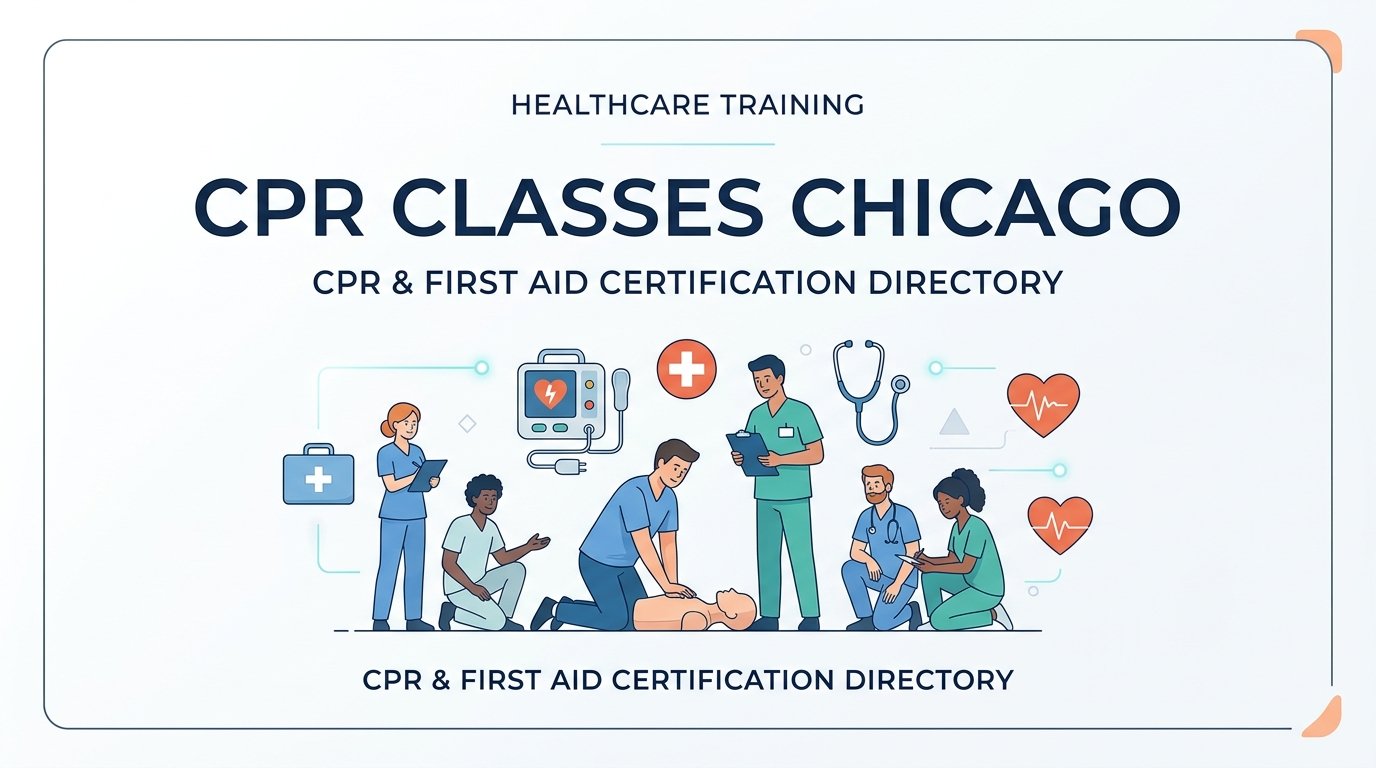
The best way to find CPR classes in Chicago is to confirm the exact course and agency your employer or school requires, then compare local options by date, price, format, and location. This guide walks Chicago students, healthcare workers, and managers through seven strategies that put acceptance first so you never pay for a card that gets rejected.
The fastest way to find CPR classes in Chicago is to confirm which course and agency you need first, then compare local classes by date, price, format, and location. Skip that first step and you risk paying for a card your employer or school won't accept. CPR stands for cardiopulmonary resuscitation, the hands-on skill of keeping blood moving when someone's heart has stopped.
These seven strategies are written for Chicago students, healthcare workers, and workplace managers. They put acceptance first and shopping second, because a cheap class that gets rejected is the most expensive one. In an emergency, call 911. Class searches can wait.
1. Confirm the exact course and agency before you search
"CPR class" covers a lot of ground. A general CPR | AED course (AED means automated external defibrillator, the device that shocks the heart back into rhythm) is not the same as Basic Life Support, or BLS, which is the healthcare provider level. If you're unsure of the difference, this guide to CPR vs BLS certification explains it. Employers and schools pick the course, and many name a specific agency, such as the American Heart Association (AHA), the American Red Cross, or Health & Safety Institute (HSI). Only the requirement holder can tell you which one counts.
Consider an illustration. A nursing student signs up for a general CPR AED class because it's close and cheap. Two weeks later the program coordinator says the program requires BLS. The student pays for a second class and loses a weekend.
To avoid that, get the answer in writing:
- Email your program coordinator, HR contact, or licensing board.
- Ask four things: Which course? Which agency? What format? Does the card need an in-person skills check?
- Save the reply where you can find it later.
- Use the exact course name when you search listings.
The common mistake is assuming any CPR card works everywhere, or that one agency is automatically preferred. Requirements vary by state and employer, and some accept several agencies while others name one. Don't guess, and don't rely on what a coworker did years ago. You can read more on whether HSI CPR certification is accepted by employers and licensing boards.
You'll know this step is done when you hold written confirmation of course, agency, and format before you register for anything.
2. Match the class format to what your employer accepts
Classes come in three formats. In-person classes do everything in a room with an instructor. Blended learning splits the work: you finish the lesson portion online, then attend a short hands-on session. Online-only classes have no hands-on part at all. The hands-on part is called a skills check, where an instructor watches you do compressions and use a training AED on a manikin.
Many workplaces and licensing boards require that skills check, so online-only cards are often rejected. See whether online CPR certification is accepted by employers before you pay. Imagine a daycare worker who picks an online-only class for speed. The employer turns the card down because nobody ever watched the worker perform the skills, and the worker has to start over.
Put it into practice by asking one direct question: "Is a hands-on skills session required?" Then filter listings by format. If you choose blended, confirm the date and location of the skills session, not just the online portion. Some blended listings treat them as separate steps, and the second one can fill up. Here's how a blended CPR course works, from online module to in-person skills check.
The pitfall is paying for an online-only course without checking acceptance. Convenience is a fine tiebreaker, but only among formats that are allowed.
The test is simple: your employer or board accepts the card on first submission, with no follow-up emails.
3. Compare classes by price, length, and what's included
Most CPR and first aid classes run about $45 to $110 as of 2026, while BLS, ACLS (Advanced Cardiovascular Life Support), and PALS (Pediatric Advanced Life Support) cost more. Chicago prices vary by provider, so treat any range as a rough guide and read each listing. The headline price rarely tells the whole story.
Here's an illustration. Two classes list similar prices. One includes the student manual and the certification card fee. The other charges for each separately, so the "cheaper" class ends up costing more. One may also run 30 minutes longer, which matters if you're taking time off work.
A quick comparison method:
- Open three to five Chicago listings for the course you confirmed.
- Write down price, length, format, agency, and included materials for each.
- Cross off any that don't match your required agency or format.
- Compare what's left on total cost and total time.
- Register directly with the chosen provider.
That last step matters. A directory like CPR Class Listing lets you compare, but it doesn't take bookings or payments. You sign up with the provider.
The mistake to avoid is choosing the lowest sticker price and ignoring add-on fees or a longer trip. Success looks like this: among the options that your employer accepts, you picked the one with the lowest combined cost and time, class plus commute.
4. Choose a Chicago location that fits your commute
Chicago is big, and travel time can eat a whole evening. Many providers start on schedule, and some turn away late arrivals because missing the opening lessons or the skills practice can mean you can't be certified that day. A location you can reliably reach is worth more than a few saved dollars.
Take a Loop office worker as an illustration. She skips a cheaper class that's hard to reach by transit and picks an evening session near a CTA line. She walks in relaxed, not rushing from a delayed train.
To plan the trip:
- Map each option from where you'll actually be that day, work or home.
- Check CTA routes, or parking and its cost if you're driving.
- Plan to arrive 15 minutes early.
- Read the provider's late policy before you register.
The classic pitfall is booking on price alone, then missing the start because of traffic, a construction detour, or a slow bus. Winter weather adds its own delays, so build in extra time for a January class. If you want a sense of how other cities compare, see the guide to CPR classes in Kansas City.
You'll know it worked when you arrive on time and finish the full class without rescheduling or paying a rebooking fee.
5. Book early and plan around peak demand
Hands-on classes have limited seats because instructors need to watch each student practice. Demand tends to jump when school programs start, hiring waves hit, or a deadline approaches. Booking early gives you choice of date, time, and location, and leaves room for a backup.
Suppose a student has a clinical start date in six weeks. She books three weeks ahead and also notes two backup sessions in case her work schedule shifts. When a shift change does happen, she moves to a backup without any panic.
Work it out like this:
- Start from your deadline and count back at least three weeks.
- Look at evening and weekend dates, which often fill first.
- Read the cancellation and reschedule policy before you pay.
- Write down one or two backup dates.
The mistake is waiting until deadline week and finding nothing open nearby. Then you either drive far, pay more, or miss the deadline.
A good measure: your card is in hand at least a week before the deadline. Some providers issue cards the same day and others take longer, so ask how soon you'll get yours.
6. Arrange group training for your workplace or team
If you manage a team, sending people to separate public classes is slow and hard to track. Many providers offer private or on-site group classes, so staff can train in one session. Group sessions also let you ask about the details that affect quality, such as minimum group size and how many students share each manikin.
Imagine a small office that compares group options. It asks each provider about minimum headcount and manikin ratios, then trains the whole staff in a single morning. Nobody has to juggle individual schedules.
The setup:
- List who needs which course. Front-desk staff may need CPR AED, while clinical roles may need BLS.
- Contact providers found in the directory and ask about group availability and pricing.
- Confirm which agency issues the cards and that it meets your requirement.
- Ask whether first aid or other safety courses can be added to the same visit.
The common mistake is booking one course for everyone. Different roles can have different requirements, and fixing that later means a second session. Managers can review first aid, CPR, and AED certification for the workplace, plus OSHA first aid and CPR requirements for employers, to see what the rules actually require.
Measure it with a simple tracker. Every required employee should hold an accepted, current card, with expiration dates recorded so renewals don't catch you off guard.
7. Plan your renewal before the card expires
CPR and BLS certifications are typically valid for about two years. The expiration date is printed on your card, and it doesn't extend itself. Renewal classes are often shorter than first-time classes, but providers may set conditions, and some only allow renewal if your card is still current.
Take a healthcare worker as an illustration. She sets a reminder 90 days before her card expires, books a renewal class with time to spare, and never has a day where her certification is invalid. A lapse could have pulled her off shifts until she retook a full course.
Here's the routine:
- Read the expiration date on your card as soon as you get it.
- Set reminders at 90 and 60 days before that date.
- Ask providers whether they offer renewal classes and what they require.
- Check with your employer on whether renewal is accepted or a full course is needed.
The mistake is letting the card lapse and assuming a short renewal class is still allowed. After expiration, you may need the full course, which costs more and takes longer.
The goal is zero days between the old card's expiration and the new one's.
Where to start, and how these fit together
Begin with strategies 1 and 2. The right course, agency, and format decide whether your card is accepted, and everything else is about price and convenience. Once that's settled, compare Chicago options by price, location, and date, then set a renewal reminder the day you're certified.
Search upcoming classes on CPR Class Listing to compare dates, prices, and certifying agencies from local training providers, then register directly with the provider in minutes. Looking for a CPR, BLS, or first aid class near you? Start there. Teach CPR? List your classes and get found by students searching in your city.
- Uncategorized
- cpr classes chicago
Written and reviewed by the CPR Class Listing editorial team against the listings in the directory. How we verify providers.
Ready to get certified?
Search upcoming CPR, BLS and first aid classes near you and register directly with a local provider.
Find a class near you