CPR Classes in Kansas City: How to Choose the Right Course, Format, and Provider
November 6, 2026 · Written by CPR Class Listing
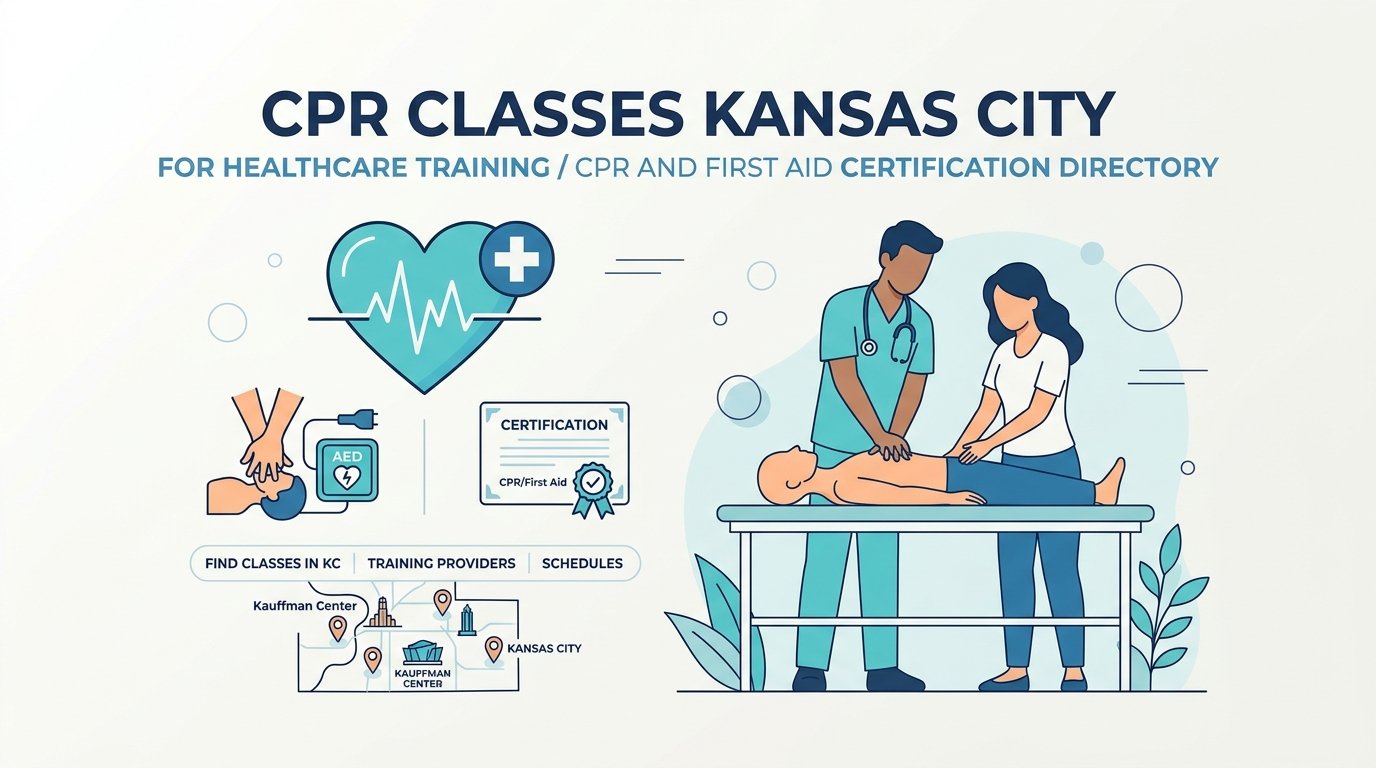
A practical guide to cpr classes kansas city.
If you need CPR classes in Kansas City, start by getting the exact course name your employer, school, or licensing board requires. Then compare local classes by date, price, format, and certifying agency. The cheapest class only counts if the card it gives you is accepted where you need it.
This guide covers the main course types, what they cost, how long they take, and how to search across the Missouri and Kansas state line as one metro area. Requirements vary by state and employer, so treat your own requirement as the final word.
Which CPR Course Do You Need in Kansas City?
Match the course to the reason you need it. CPR (cardiopulmonary resuscitation) is the skill of giving chest compressions and breaths to someone whose heart has stopped. An AED (automated external defibrillator) is the portable device that can shock the heart back into a normal rhythm. Most courses teach both.
- CPR AED: for workplaces, teachers, coaches, fitness staff, and the general public.
- BLS (Basic Life Support): for nurses, EMTs, dental staff, and other healthcare students and workers. It is a healthcare-provider level course that includes team-based response.
- ACLS (Advanced Cardiovascular Life Support): for clinicians managing cardiac emergencies. Providers usually expect you to already hold BLS.
- PALS (Pediatric Advanced Life Support): for clinicians treating seriously ill or injured children. BLS is usually expected here too.
Add-on and combined courses
First Aid | CPR AED combines both skill sets. It is a common fit for childcare, camps, and jobs with workplace safety rules, including some OSHA-related requirements. Pediatric First Aid | CPR AED focuses on infants and children and suits childcare providers and parents. Babysitting courses are built for younger sitters and cover basic safety and care along with emergency skills.
The most common mistake
People sign up for a general CPR class when their healthcare program asked for BLS. The two sound alike, but the cards are not interchangeable, and you may have to pay for the right class a second time.
Before you register, ask your employer, school, or board for the exact course name in writing. A short email is enough. Keep it so you can compare it against each class listing.
How Much Do CPR Classes in Kansas City Cost?
As of 2026, most CPR and first aid classes run about $45 to $110. BLS, ACLS, and PALS usually cost more. Prices vary by provider, so use these numbers as a starting point and check each listing for the current price.
What changes the price
- Course type: a basic CPR AED class costs less than a combined first aid course, and advanced courses like ACLS and PALS cost more than both.
- Format: blended courses and fully in-person courses are often priced differently, and the split between online and hands-on fees varies.
- What's included: some providers include the card fee and student manual. Others charge for them separately.
- Group size: workplaces booking several people, or asking for an on-site class, may get group rates. Ask the provider directly.
A checklist for comparing listings
- What is the total price, with the card and any manual included?
- If the course is blended, is the in-person skills session fee separate from the online portion?
- What is the cancellation or reschedule policy? Confirm this with the provider before you pay.
- Is the certifying agency the one you were told to get?
The cheapest class is not always the best value. A $45 class that your employer rejects costs more than a $75 class they accept. Compare price only among classes that meet your requirement.
In-Person, Blended, or Online: Which Format Will Be Accepted?
Format is where many people go wrong, so check it before you look at price. There are three common formats.
- Fully in-person: all instruction and practice happen in a classroom with an instructor.
- Blended: you do the lessons online at your own pace, then attend a hands-on skills check with an instructor. A skills check is a short session where you show you can perform compressions, breaths, and AED use correctly.
- Online-only: everything is done on a screen, with no hands-on component.
Why online-only is risky
Online-only courses are often not accepted where a hands-on skills check is required. That includes many healthcare, childcare, and workplace safety requirements. Some employers do accept them, and rules differ by state and employer, so verify before you pay.
Consider a common scenario. A nursing student finds a cheap online-only course, finishes it in an evening, and submits the card. The program then says it needs a hands-on BLS skills check, and the student has to take a full class anyway. The first fee was wasted. This is an illustration, not a statistic, but it plays out often enough that asking first is worth the five minutes.
What to ask about a blended skills session
Blended learning can save classroom time, but you still have to schedule and attend the skills session. Before booking, ask:
- Where is the skills session held, and how often is it offered?
- How long does it take?
- Is the session fee included in the listed price?
- Do I need to finish the online portion first and bring proof of completion?
- Is there a deadline between the online part and the skills check?
If your requirement says "hands-on" or "in-person skills," a blended or fully in-person class is the safer pick.
AHA, Red Cross, or HSI: Does the Certifying Agency Matter?
The American Heart Association (AHA), the American Red Cross, and the Health & Safety Institute (HSI) all offer widely recognized CPR, first aid, and related courses. Each has its own curriculum and card design. None is the right answer for everyone, and this article doesn't rank them.
When the agency matters
Some employers, hospitals, and training programs name a specific agency, especially for BLS. Others accept any nationally recognized course that includes hands-on practice. You can't tell which is which by guessing, and a card from the wrong agency may be turned down even if the class itself was solid.
How to confirm what is accepted
Ask the person who will review your card: HR, a program director, a clinical coordinator, or the licensing board. Ask three things:
- Which agencies do you accept?
- Which format is required (in-person, blended, or either)?
- What is the exact course name?
Ask for the answer in writing so you can match it to a listing.
Check the expiration date
Certification is typically valid for 2 years. Look at the expiration date on your current card, and check the renewal rules for your own requirement. Some employers want you renewed before the card expires, and some programs have their own timelines.
How Do You Find and Compare CPR Classes Across the Kansas City Metro?
Treat the metro as one search area. It spans Kansas City, Missouri, and Kansas City, Kansas, plus suburbs such as Overland Park, Olathe, Lee's Summit, and Independence. If dates near you are full, widen your search radius. A class a short drive across the state line may fit your schedule better. Confirm that the course meets your requirement no matter where you take it.
How CPR Class Listing works
CPR Class Listing is a national directory of CPR, BLS, ACLS, PALS, first aid, safety, and instructor classes. Training providers list their classes. You compare them by date, price, format, and agency, then register directly with the provider. CPR Class Listing doesn't teach classes, sell certifications, take bookings, or process payments.
A step-by-step search
- Confirm the required course. Get the exact name, agency, and format from your employer, school, or board.
- Filter by agency and format. Narrow the results so you only see classes that qualify.
- Compare dates and price. Look at the total cost and whether an upcoming date fits before your deadline.
- Check the location and skills session details. For blended classes, confirm where and when the hands-on part happens.
- Register with the provider. Use the provider's own registration process, and keep your confirmation.
If you have a hard deadline, such as a clinical start date or a new job, build in extra time. Popular dates fill up, and a skills session may not be offered every day.
What Should You Expect on Class Day and After?
Classes are practical. You'll spend most of your time on the floor practicing, not listening to lectures. A typical class includes hands-on practice on manikins, AED training, and a skills check. Some courses also include a short written test. Length varies by course and format, so confirm the time with the provider.
What to bring and wear
- Comfortable clothes you can kneel in.
- A photo ID.
- Any required prerequisite card, such as a current BLS card for an ACLS or PALS class.
- Proof of any online portion you've already finished, if your class is blended.
After class
How and when you get your card depends on the provider. Many issue an electronic card, but ask when to expect it, especially if you have a deadline. Once you have it, note the expiration date. Certification is typically valid for 2 years, so set a calendar reminder a few months ahead to book your renewal.
A class teaches skills, but it isn't medical advice. In an emergency, call 911 first.
Frequently Asked Questions About CPR Classes in Kansas City
How long is a CPR certification good for?
Typically 2 years. Confirm the rule with your employer or program, since some have their own renewal timelines.
Is online-only CPR accepted?
Often not, especially where a hands-on skills check is required. Verify with your employer, school, or board before you pay.
What's the difference between CPR and BLS?
BLS is a healthcare-provider level course. It covers CPR and AED use but is designed for clinical settings and includes team-based response. Standard CPR AED classes are aimed at the general public and workplaces. Healthcare programs usually ask for BLS by name.
Can I register through CPR Class Listing?
No. CPR Class Listing is a directory, so you register directly with the provider whose class you choose.
Can training centers list classes?
Yes. Providers can list their courses to reach students searching for classes.
Confirm First, Then Compare and Register
The order matters. Get the required course, agency, and format in writing first. Then compare classes against that, not against price alone. A card that gets rejected is the most expensive option.
Looking for a CPR, BLS or first aid class near you? Search upcoming classes on CPR Class Listing to compare dates, prices and certifying agencies from local training providers, then register directly with the provider in minutes.
- Uncategorized
- cpr classes kansas city
Written and reviewed by the CPR Class Listing editorial team against the listings in the directory. How we verify providers.
Ready to get certified?
Search upcoming CPR, BLS and first aid classes near you and register directly with a local provider.
Find a class near you