BLS Certification NYC: What It Is, What It Costs, and How to Find a Class
November 8, 2026 · Written by CPR Class Listing
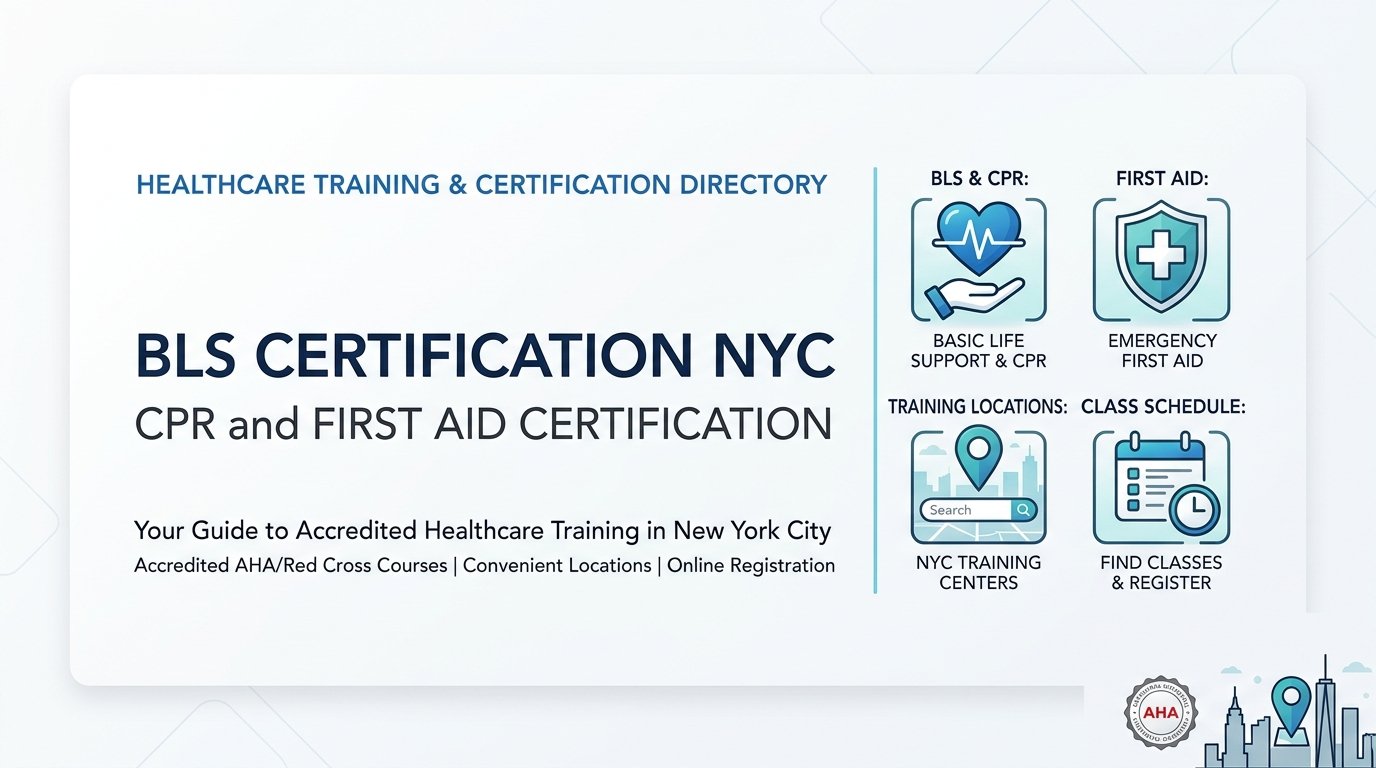
A practical guide to bls certification nyc.
BLS (Basic Life Support) certification in NYC is a hands-on CPR course built for healthcare providers. Most classes finish in a half day, and the card is typically valid for 2 years. The harder part isn't passing the class. It's making sure the card you earn is the one your employer, school, or licensing board will accept.
This article covers who needs BLS, what the class teaches, how agencies and formats differ, what affects cost, and how to find a class in the five boroughs.
Who needs BLS certification in New York City?
BLS is usually required for people who work in or train for clinical care. Common examples include:
- Nurses and nursing students
- Emergency medical technicians (EMTs) and paramedics
- Physicians and medical students
- Dentists, dental hygienists, and dental assistants
- Physical therapists and physical therapy students
- Students in other allied health programs
Some employers outside direct patient care also ask for it, so check your own job or program rather than assuming.
How BLS differs from standard CPR AED
A community CPR AED class (CPR plus automated external defibrillator training) is written for the general public. BLS is written for people who respond to emergencies as part of their job. It covers high-quality CPR for adults, children, and infants, and it adds team-based response and bag-mask ventilation. You practice working as part of a resuscitation team, not just as a lone helper.
Where the requirement actually comes from
Your employer, school, or licensing board sets the rule. A directory or a class provider doesn't. That means the first step is a short message to HR, your program coordinator, or your board asking what they require. Don't rely on a coworker's memory or an old job posting, since policies change.
One common misconception is worth clearing up: a general community CPR card is not always accepted in place of BLS. Many healthcare employers specifically ask for a provider-level course. If your card says "CPR AED" and your employer wants "BLS," you may have to take the class again.
What do you learn in a BLS class?
The core of the class is hands-on practice. You work on manikins until your compressions, breaths, and timing become routine. Most courses cover these skills across age groups:
- Chest compressions at the right depth and rate, with minimal interruptions
- Rescue breaths
- AED use
- Relief of choking in adults, children, and infants
Adult, child, and infant techniques differ in hand placement, depth, and sometimes the number of rescuers, so expect to practice each one.
Provider-level skills
This is where BLS goes beyond a standard CPR class. You'll learn two-rescuer CPR, where partners switch roles to avoid fatigue. You'll use a bag-mask device to deliver breaths. You'll also practice team roles and clear communication, such as calling out compressions, timing, and switches so everyone knows what's happening.
Skills test and written exam
Most BLS courses end with two checks. In the skills test, an instructor watches you perform CPR and use an AED on manikins. A written exam, usually multiple choice, covers the concepts behind what you practiced. Exact content, passing scores, and the number of questions vary by agency and provider, so ask the provider what to expect if you want to prepare.
A class teaches skills. It isn't medical advice, and it doesn't replace your clinical judgment or your employer's protocols. In a real emergency, the first step is always to call 911 (or your facility's emergency response number if you're at work).
AHA, Red Cross, or HSI: which BLS card will your employer accept?
Three organizations are widely recognized for BLS-level courses:
- American Heart Association (AHA): offers BLS Provider courses and is commonly named in hospital and health system requirements.
- American Red Cross: offers BLS courses for healthcare providers and professional rescuers.
- Health & Safety Institute (HSI): offers BLS-level courses through its network of training centers and instructors.
All three teach the same core life-saving skills. The difference that matters to you is acceptance. Some hospitals, schools, and licensing boards name one agency specifically. Others accept any recognized agency as long as the course includes a hands-on skills check. There's no single answer that applies to every NYC employer, so confirm yours.
Questions to ask before you book
- Which agency or agencies do you accept?
- Which formats do you accept: in-person, blended, or online-only?
- Must the card show that I completed a hands-on skills check?
- What should the card or course name say, for example "BLS Provider" or "BLS for Healthcare Providers"?
- Do you accept a digital card (eCard), or do you need a printed copy?
Get the answers in writing if you can. An email from HR or your program coordinator is enough. If you show up with the wrong card, the usual fix is retaking the class, which costs you time and money. A saved email makes it easy to settle any later confusion.
Which BLS class format is right: in-person, blended, or online-only?
Format affects your schedule, and it can also affect whether your card is accepted. There are three main options.
In-person
All instruction and skills testing happen in one session. Many classes run about 3 to 4 hours, though length varies by provider and by whether it's an initial or renewal class. This is the simplest option if you want everything done in one visit and the chance to ask an instructor questions as you go.
Blended
You complete online coursework first, at your own pace, then attend a shorter in-person session where an instructor checks your skills. Blended learning cuts the time spent in the classroom, and it's widely used for BLS. Make sure you finish the online portion before your skills session, since providers often require proof of completion.
Online-only
Fully online BLS courses are often not accepted where a hands-on skills check is required, and that includes many healthcare employers and programs. They can be fine for personal knowledge or for a workplace that explicitly allows them. Verify before you pay, because a card that isn't accepted is money wasted.
A quick decision example
Suppose a nursing student's program requires an in-person skills check on the card. A blended class would likely work, as long as the card reflects the hands-on session, but the program should confirm that. A fully online course would not. Now imagine a working clinician renewing a card, with an employer that accepts blended. That person might choose blended to avoid a long block of classroom time and book a short skills session after a shift. Same certification, different best fit, and both choices depend on what the employer or program allows.
How much does BLS certification cost in NYC?
Basic CPR and first aid classes usually run about $45 to $110. BLS typically costs more than that, because it's a longer, provider-level course. We're not going to quote an exact NYC price here, since fees vary by provider and change over time. The reliable way to know is to compare current prices on provider listings. As of today, always treat any number you see as a snapshot and confirm it before you register.
What moves the price
- Agency: fees can differ between AHA, Red Cross, and HSI courses.
- Format: in-person and blended classes may be priced differently, and some blended options charge separately for the online part and the skills session.
- New vs. renewal: renewal classes are often shorter and may cost less, but not every provider offers one.
- Group rates: clinics, schools, and departments sometimes get a discount for booking several people.
- Materials: whether the student manual or eCard is included in the fee.
Ask about extra costs
A low advertised price can grow once add-ons appear. Before you register, ask:
- Is the student manual included, or is there a separate book fee?
- Is there a card or eCard fee?
- What is the retake policy if I don't pass the skills test or exam, and is there a charge?
- If I use the blended format, is the online portion paid separately?
Comparing the total you'll pay, not just the headline price, gives you a fair read on which class costs less.
How do you find and compare BLS classes in NYC?
Once you know the agency and format you need, the search is straightforward.
- Go to the CPR Class Listing directory and search for BLS.
- Filter by location, date, price, format, and agency.
- Compare listings side by side, checking that the agency and format match what your employer or school told you.
- Register directly with the provider. CPR Class Listing doesn't teach classes, take bookings, or process payments.
Practical NYC factors
Getting to class matters in a city this size. Check which borough the class is in and how close it is to a subway or bus line. Look at whether sessions run on weekdays, weekends, or evenings, especially if you work shifts. It's also fair to ask about class size, since smaller groups generally mean more time on the manikins and more feedback from the instructor.
Plan your renewal
BLS certification is typically valid for 2 years. Your card shows an expiration date, so book your renewal before it arrives. Some employers don't allow any lapse, and a gap can mean retaking the full initial course. Check whether the provider offers a renewal class and whether you need to bring your current card.
For training centers
If you teach BLS in the city, you can list your classes on CPR Class Listing so students comparing options by date, price, format, and agency can find you.
Choosing the BLS class your employer will accept
The right BLS class is the one your employer, school, or licensing board accepts. Price and convenience come second. Confirm the required agency, format, and card name first, then compare what's available.
Looking for a CPR, BLS or first aid class near you? Search upcoming classes on CPR Class Listing to compare dates, prices and certifying agencies from local training providers, then register directly with the provider in minutes.
- Uncategorized
- bls certification nyc
Written and reviewed by the CPR Class Listing editorial team against the listings in the directory. How we verify providers.
Ready to get certified?
Search upcoming CPR, BLS and first aid classes near you and register directly with a local provider.
Find a class near you