How to Find and Choose CPR Classes in Jacksonville, FL
November 5, 2026 · Written by CPR Class Listing
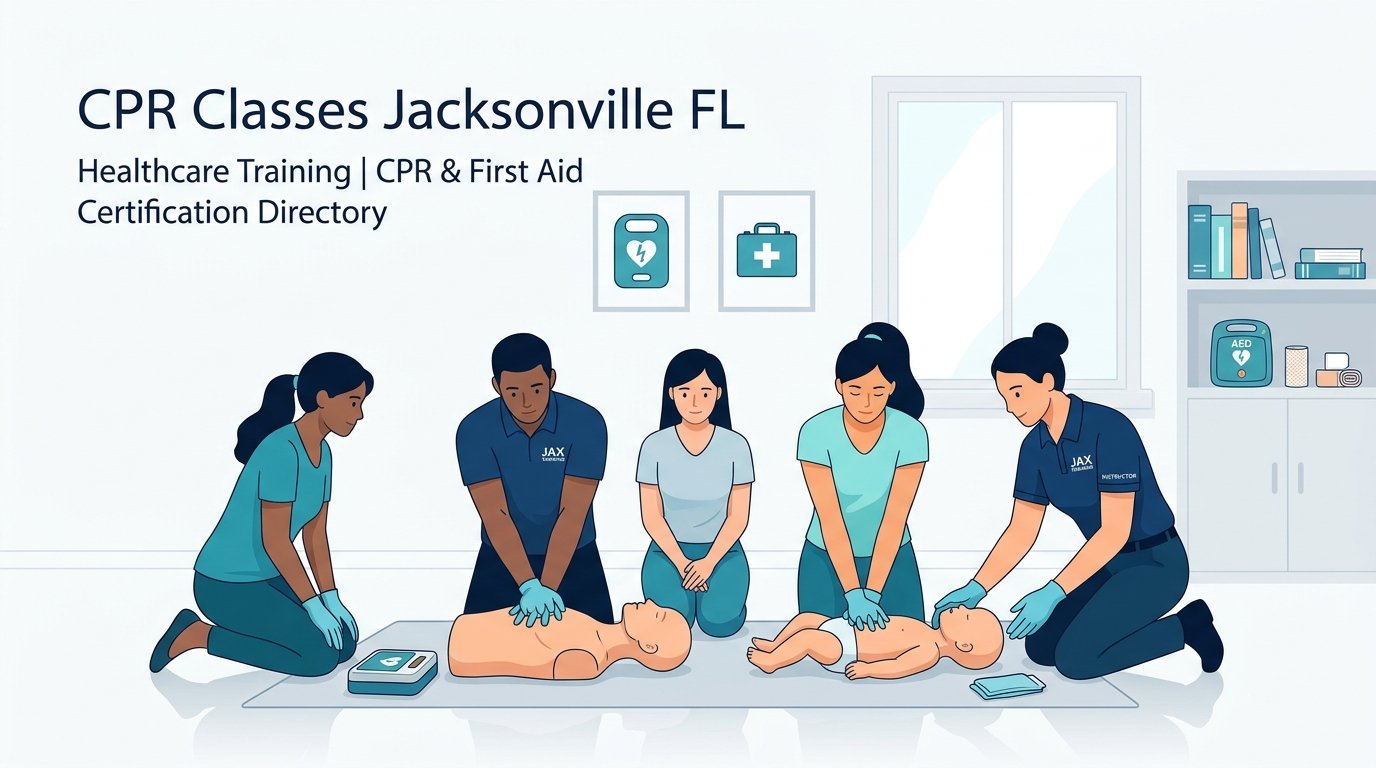
Finding CPR classes in Jacksonville, FL is easier with a six-step process: confirm the course your employer or school requires, pick an agency and format, compare local providers, check the details, register, and prepare for class day. Following these steps helps you avoid paying for a certification card that gets turned down.
You can find a CPR class in Jacksonville, FL that fits your schedule, budget, and job requirements in six steps: confirm the course you need, pick an agency and format, compare local classes, check the details, register with the provider, and prepare for class day. Before you start, find out whether your employer, school, or licensing board requires a specific course or agency. That one answer decides most of the choices that follow, and it keeps you from paying for a card that gets turned down.
Step 1: Confirm Which Course You Need
Ask your employer, school, or licensing board for the exact course name, and get it in writing if you can. An email works. Course names are specific, and "CPR class" can mean several different things.
The names you'll see most often are:
- CPR AED: cardiopulmonary resuscitation (CPR) plus use of an automated external defibrillator (AED), for adults and sometimes children and infants.
- First Aid | CPR AED: the same skills plus first aid for bleeding, choking, burns, and other common emergencies.
- Basic Life Support (BLS): a more technical CPR course built for healthcare providers, including team-based resuscitation.
- Pediatric First Aid | CPR AED: focused on infants and children.
As a rough guide, healthcare students and clinical staff usually need BLS. Teachers, childcare workers, coaches, and general workplaces often need CPR AED or First Aid | CPR AED. Advanced Cardiovascular Life Support (ACLS) and Pediatric Advanced Life Support (PALS) are advanced courses for certain clinical roles, and they usually build on BLS. Requirements vary by employer and licensing board, so don't guess.
The most common mistake is signing up for a general CPR class when the job requires BLS. The card may look similar, but it won't be accepted. Parents, babysitters, and people learning for personal interest usually have more flexibility and can choose based on what they want to learn.
Jacksonville has hospitals, schools, childcare centers, and military-connected workplaces, and each can have its own rules. Ask your own HR department, program director, or supervisor rather than assuming what a similar employer requires.
Step 2: Confirm the Required Agency and Class Format
Three national organizations issue most CPR cards: the American Heart Association (AHA), the American Red Cross, and the Health & Safety Institute (HSI). None is automatically better. The right one is whichever your employer or board accepts. Some accept all three, and some name just one.
Next, the format. You'll see three:
- In-person: everything happens in a classroom with an instructor, from the lesson to the hands-on practice.
- Blended: you finish an online lesson on your own time, then attend a shorter hands-on skills session. This is sometimes called blended learning.
- Online-only: everything is done on a computer, with no in-person practice.
Online-only is where people get burned. Many employers and boards require a hands-on skills check, where an instructor watches you perform compressions and breaths on a manikin. A card from an online-only course often isn't accepted in those cases. If you're taking the class purely for personal knowledge, online-only may be fine, but confirm before you pay if a job is involved.
Choosing between blended and in-person is mostly about how you learn. Blended saves classroom time, but you must finish the online part before the skills session, and some providers won't let you in without proof. In-person suits people who want instructor guidance from start to finish or who don't want to manage online coursework.
Ask the requiring party one clear question: "Which agency and format do you accept?" Write down the answer. You'll use it to filter listings in the next step.
Step 3: Search and Compare Jacksonville CPR Classes on a Directory
CPR Class Listing is a national directory of CPR, BLS, ACLS, PALS, first aid, safety, and instructor classes. Training providers list their classes, and you compare them by date, price, format, and agency. Then you register directly with the provider. The directory doesn't teach classes, take bookings, or process payments.
To search:
- Enter Jacksonville, FL as your location.
- Filter by course type, such as BLS or First Aid | CPR AED.
- Filter by the agency your employer or board accepts.
- Filter by format: in-person or blended.
- Sort by date if you're on a deadline, or by price if you're flexible on timing.
Compare at least three listings side by side before you decide. Look at the same details for each: date and time, price, agency, format, and location.
Location matters more than you might expect. Jacksonville covers a lot of ground, and drive time can change a lot depending on where you live or work and what time of day the class meets. Check the address on each listing against your own route, including rush hour if the class is on a weekday evening. Don't assume a class that looks close on a map is a short drive.
One mistake to avoid: picking only the lowest price. A cheap class from the wrong agency, or in the wrong format, costs you twice when you have to retake it. Match agency and format first, then compare price.
Step 4: Check Cost, Length, and Card Details Before You Pick
As of 2026, most CPR and first aid classes run about $45 to $110. BLS, ACLS, and PALS usually cost more. Prices change and vary by provider, so confirm the current price on the listing or with the provider rather than relying on a general range.
Class length varies by course. BLS and CPR AED classes are generally shorter than a combined First Aid | CPR AED class, since the combined course covers more material. Blended classes shorten the in-person part but add online time at home. Check the listed duration instead of assuming, especially if you have to fit it around a work shift.
CPR and related certifications are typically valid for 2 years. If you're recertifying, ask whether the provider offers a renewal or update option, since some classes are built for people who already hold a current card.
Before you commit, ask these questions about what you're paying for:
- Is the student manual included, or is it a separate cost?
- Is the card fee included in the price?
- Does the price cover the skills test?
- Is the card digital or printed, and how soon is it issued?
- Are there any other fees charged separately?
Some providers quote one price that covers everything. Others list a base price and add fees for materials or the card. The listing price may not tell the whole story, so a short call or email can save you a surprise at checkout.
Step 5: Register Directly With the Provider
Once you've picked a class, click through from the listing to the provider and register with them. Booking and payment happen on the provider's end, not through the directory. That also means the provider is who you contact if something changes.
Before you pay, confirm a few things:
- Is the class still open, with seats available?
- What is the cancellation or reschedule policy?
- Will the card come from the agency you need?
- Is there a minimum enrollment, and what happens if the class doesn't reach it?
Schedules and availability can shift, so a quick confirmation protects you. The agency question is worth asking again here, even if the listing says it, because it's the detail that causes the most trouble later.
After you register, save the confirmation email. Keep the address, start time, and any instructions in one place. For a blended class, also save the link to the online course and note the deadline for finishing it before the skills session. Some providers want proof of completion at the door.
If the class turns out to be full or gets canceled, don't wait around for a reschedule. Go back to the directory, apply the same filters, and pick the next closest option. You already know your agency and format, so a second search takes a few minutes.
Step 6: Prepare for Class Day
Wear comfortable clothing you can move in. You'll kneel on the floor to practice compressions on manikins, so skip anything tight or restrictive. Bring photo ID if the provider asks for it. If you're in a blended class, bring proof that you finished the online portion, whether that's a certificate or a confirmation email.
Expect plenty of hands-on practice. You'll work on chest compressions and rescue breaths, and you'll use an AED trainer, a practice device that works like the real thing without delivering a shock. The class ends with a skills check, where the instructor watches you perform the steps. Depending on the course, there may also be a written test. First Aid | CPR AED and BLS classes are more likely to include one.
If something feels unclear, ask. Instructors expect questions, and practicing again until the technique feels right is part of the class.
After class, take care of three things:
- Confirm your card arrives, whether digital or printed, within the timeframe the provider gave you.
- Send a copy to your employer, school, or program, and keep one for yourself.
- Set a calendar reminder for about 2 years out, a bit ahead of the expiration date, so you have time to book a renewal.
Training builds skills, but it doesn't replace emergency services. In an emergency, call 911 first.
After Your Card Arrives: Check It, Then Plan the Renewal
Look at the card once it's issued. Make sure the agency and course name match what your employer or board asked for in Step 1 and Step 2, and that your name and dates are correct. If something's off, contact the provider right away. It's much easier to fix before you hand the card to anyone else.
Then keep your renewal reminder somewhere you'll see it. When the time comes, the same search process works again, and you can filter for renewal or update classes if your agency offers them.
Looking for a CPR, BLS or first aid class near you? Search upcoming classes on CPR Class Listing to compare dates, prices and certifying agencies from local training providers, then register directly with the provider in minutes.
- Uncategorized
- cpr classes jacksonville fl
Written and reviewed by the CPR Class Listing editorial team against the listings in the directory. How we verify providers.
Ready to get certified?
Search upcoming CPR, BLS and first aid classes near you and register directly with a local provider.
Find a class near you