How to Find and Choose CPR Classes in Fairfax, VA
November 2, 2026 · Written by CPR Class Listing
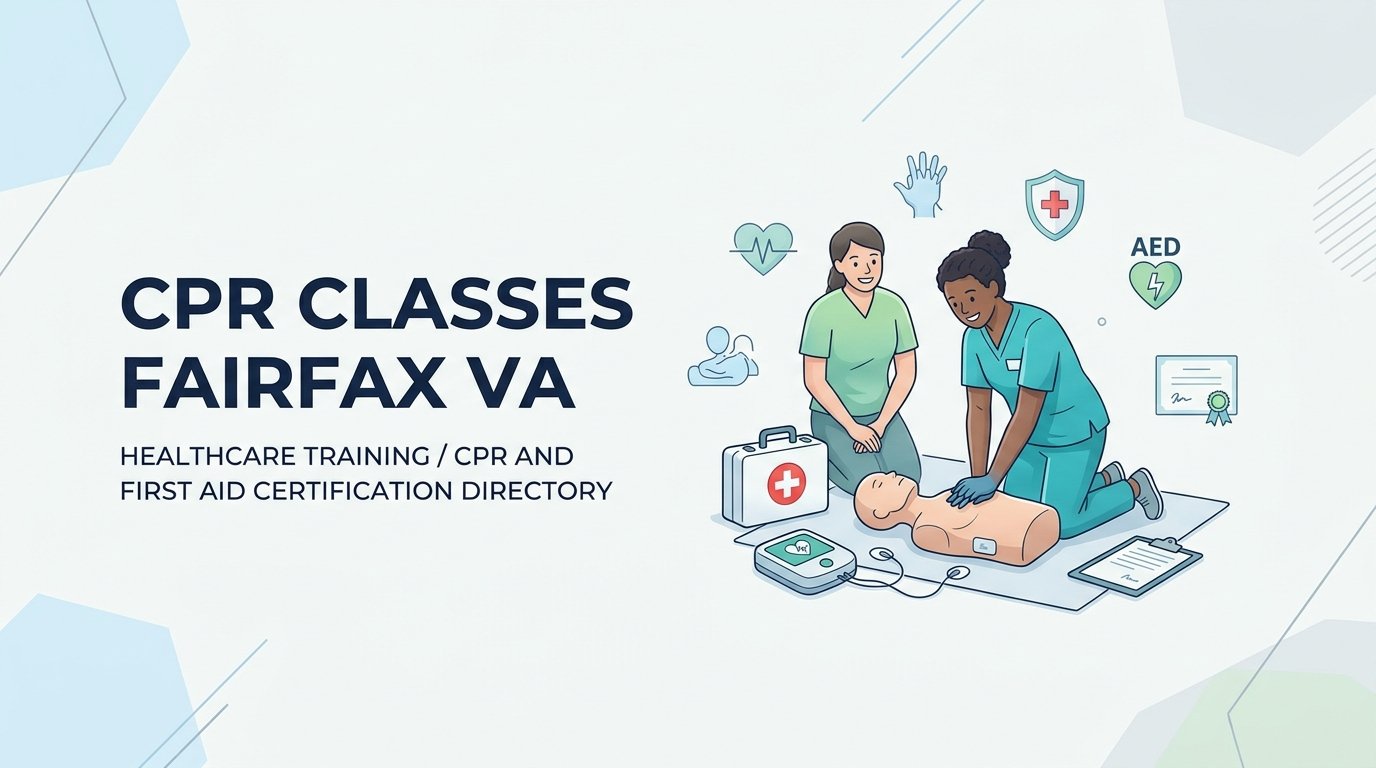
This step-by-step guide explains how to find CPR classes in Fairfax, VA by first confirming which certification your employer, school, or licensing board requires. It then shows how to compare local listings by date, price, format, and agency so you register with the right provider and never pay for a card that won't be accepted.
To find CPR classes in Fairfax, VA, confirm which certification you need, compare local listings by date, price, format and agency, then register directly with the provider. Doing it in that order keeps you from paying for a card your employer or school won't accept. CPR stands for cardiopulmonary resuscitation, the chest compressions and rescue breaths used when someone's heart stops.
Before you start, get your employer, school, or licensing board requirements in writing if you have them. An email or a line from a handbook is enough. You'll use it at nearly every step below.
Step 1: Confirm which certification you need
CPR courses aren't interchangeable. The right one depends on your job, your school program, or who you'll be caring for. Here are the common matches:
- First Aid | CPR AED: the usual choice for most workplaces, such as offices, gyms, and job sites. AED stands for automated external defibrillator, the device that can shock the heart back into a normal rhythm.
- BLS (Basic Life Support): the course for healthcare roles. Nurses, EMTs, dental staff, and students in clinical programs are often asked for it.
- Pediatric First Aid | CPR AED: built for child care providers, teachers, and anyone who looks after young children.
- Babysitting: a course for younger sitters that covers basic safety and care skills.
Don't guess from the job title alone. Ask your employer, school, or licensing board for the exact course name and the agency they accept: the American Heart Association (AHA), the American Red Cross, or the Health & Safety Institute (HSI). Some accept more than one. Others name one and nothing else. If HSI is on your list, it helps to know whether HSI CPR certification is accepted by employers and licensing boards.
The most common mistake is taking a general CPR class when a healthcare employer requires BLS. The two overlap, but BLS is aimed at healthcare providers and covers team response and techniques a standard class may skip. Our guide to CPR vs BLS certification breaks down the difference. If you show up with the wrong card, you'll likely have to retake the course and pay again.
You may also see ACLS (Advanced Cardiovascular Life Support) and PALS (Pediatric Advanced Life Support). These are advanced courses for clinical staff, and they usually expect you to have current BLS skills. If you think you need one, check the prerequisites with the provider before you sign up.
Step 2: Decide which class format works for you
Classes come in three formats, and the format matters as much as the course name.
- Fully in-person: everything happens in one session with an instructor, from the lesson to the hands-on practice.
- Blended learning: you finish an online lesson on your own time, then attend a shorter in-person skills session.
- Online-only: all coursework is done on a screen, with no hands-on component.
A skills check is a short, hands-on test where an instructor watches you perform compressions and other skills on a manikin. Many workplaces and nearly all healthcare employers want to see that check on your card. Online-only courses often aren't accepted where a skills check is required, so verify before you buy one. For more detail, see whether online CPR certification is accepted by employers. If you need the card only for personal knowledge, online-only may be fine, but confirm that too.
Blended classes tend to suit busy schedules in the Fairfax area. The in-person part is short, so you aren't giving up a full day, and you can do the online lesson at night or on a weekend. If you want to see how the pieces fit together, here is how a blended CPR course works, from the online module to the in-person skills check. The catch is timing: you must finish the online portion before the skills session, and some providers won't let you in the room without proof you did.
When you look at a blended class, ask two questions:
- Is the skills session a separate booking from the online lesson?
- Is the online portion included in the price, or do you buy it elsewhere?
Answers vary by provider and agency, and they affect both your schedule and your total cost.
Step 3: Search the Fairfax, VA listings and filter them
CPR Class Listing is a national directory. Training providers post their classes, and you browse them in one place instead of visiting a dozen separate websites. You can compare CPR classes in Fairfax, VA by date, price, format and agency, then register directly with the provider you pick. CPR Class Listing doesn't teach classes, sell certifications, take bookings, or process payments.
Filter in this order so you don't waste time:
- Course name. Start with the exact course you confirmed in Step 1. Ignore any listing that doesn't match it, even if the price looks good.
- Agency. Narrow to AHA, Red Cross, or HSI, depending on what your employer or board named.
- Format. Keep only the formats you decided on in Step 2.
- Date. Look at dates last. A perfect date on the wrong course is still the wrong class.
If the dates are thin, widen your search to nearby parts of Northern Virginia. A class a short drive away may have an open weekend slot when Fairfax doesn't. Before you commit, think about the commute at the time of day you'd be driving, and check whether the location has free parking or a paid lot. Those details are easy to miss and can add real time and cost.
Availability changes often, since providers add and fill classes continually. If you find a good fit, save the listing details so you can refer back to them in the next steps.
Step 4: Compare price, length, and what's included
As of now, most CPR and first aid classes run about $45 to $110. BLS, ACLS, and PALS cost more. Prices vary by provider, so treat that range as a rough guide and rely on the number in the listing itself.
The sticker price only helps if you know what it covers. Check each listing, or ask the provider, whether the fee includes:
- The certification card, which is often delivered electronically as an eCard
- The student manual or course materials
- The hands-on skills session, if the class is blended
- The online lesson, if the class is blended
Hidden costs usually show up in a few places. Some providers charge a separate fee for the card. Some require you to buy a book or access code. In blended courses, the online portion is sometimes sold separately from the skills session, which can make a cheap-looking class cost more than a higher-priced one that bundles everything.
Here's a quick illustration. Imagine two blended listings. One is priced lower but doesn't include the online lesson. The other costs a bit more and includes everything. Once you add the online fee to the first, the second may be the better deal. Always compare the total you'd pay, not the headline number.
Class length varies by course, agency, and format. A first aid and CPR class generally takes longer than a CPR-only class, and a blended skills session is shorter than a full in-person course. Don't assume. Read the listed duration, and plan around it, especially if you're taking time off work.
Step 5: Verify the class will be accepted
This is the step that saves you from paying twice. Before you register, send your employer, school, or board the details of the class you're considering: the course name, the agency, and the format. A short message is enough, such as "I'm planning to take this course with this agency in a blended format. Will that meet the requirement?"
It also helps to ask the provider a few direct questions:
- Is the card issued by AHA, Red Cross, or HSI?
- Does the class include an in-person skills check?
- How and when is the card delivered?
- Will the course name on the card match what my employer asked for?
Requirements vary by employer, school, and state. Don't rely on a friend's experience or on what a coworker took last time, since rules differ between workplaces and professions. If you're an employer sorting out what your workplace needs, this overview of OSHA first aid and CPR requirements for employers explains what the rules actually require. Your employer or licensing board has the final say, and a written yes is the best protection.
While you're confirming details, ask how long the card is valid. CPR and first aid certifications are typically valid for 2 years. When you finish the class, write down the expiration date right away so you can plan your renewal early rather than scrambling after it lapses. Some jobs don't allow even a short gap in certification.
Step 6: Register with the provider and prepare for class day
Once the class checks out, register directly with the provider listed. Use the contact or registration details on the listing, and pay the provider, not the directory. CPR Class Listing doesn't take bookings or payments.
After you sign up, handle the logistics:
- Save your confirmation email or receipt.
- Read the cancellation and reschedule policy so you know what happens if your plans change.
- If your class is blended, finish the online pre-work before the skills session, and keep proof of completion if the provider asks for it.
- Note the address, arrival time, and parking instructions.
On class day, wear comfortable clothes you can move in. You'll spend time kneeling on the floor to practice compressions, so skip anything tight or restrictive. Bring a photo ID and any materials the provider asked for, such as your online completion certificate or a printed confirmation.
After class, don't assume the paperwork is done. Confirm you received your card, whether it's a physical card or an eCard. Check that your name, the course title, and the agency are correct. Then send a copy to your employer or school if they need one. Finally, set a calendar reminder a couple of months before the expiration date so you have time to find a renewal class.
Your CPR certification checklist and next move
Before you call it done, run through four checks:
- You took the right course for your job or program.
- The format was accepted by whoever requires the card.
- You received the card and sent a copy where needed.
- Your renewal date is set.
Learning CPR is about being ready, but in a real emergency, call 911 first and follow the dispatcher's instructions.
Looking for a CPR, BLS or first aid class near you? Search upcoming classes on CPR Class Listing to compare dates, prices and certifying agencies from local training providers, then register directly with the provider in minutes.
- Uncategorized
- cpr classes fairfax va
Written and reviewed by the CPR Class Listing editorial team against the listings in the directory. How we verify providers.
Ready to get certified?
Search upcoming CPR, BLS and first aid classes near you and register directly with a local provider.
Find a class near you